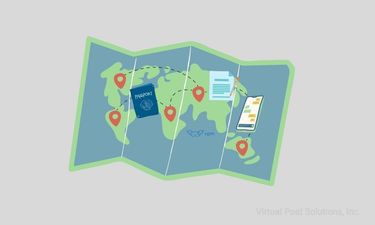
You’ve discovered one of the biggest pitfalls of nomadic life: The lack of a consistent home address.
Unfortunately, passports and temporary addresses can only get you so far. Most financial institutions today require proof of address something PO boxes, virtual mailboxes, and your favorite Airbnb simply aren’t able to provide.
The good news? TruResidence (TruRes) can simplify most of your home address headaches. Designed specifically for expats, TruResidence (TruRes) allows you to secure a remote U.S. home address, add-on lease agreement, and optional utility bill for proof, all while traveling or living overseas.
Keep reading to find out how you can get a verified U.S. residential address and why it’s so essential that you have one.
Why every expat needs a verified U.S. residential address
It’s easy to treat your address as an afterthought when everything is going right. But one day, your personal account gets flagged by the bank. Or maybe your credit card application gets denied, citing inadequate documentation. Suddenly, the address you’ve been using for years is no longer good enough.
These days, most financial institutions you come across will require a residential address that meets specific criteria. Let’s take a look at what that means for you.
How banks define a residential address
Once upon a time banks may have been content to have a simple mailing address (i.e. a PO box, virtual mailbox, or other type of CMRA address) on file. However, Know Your Customer (KYC) regulations now require customers to provide more extensive documentation. Specifically, a residential address that can be traced back to you.
From a compliance perspective, a residential address is the physical, long-term location where you live. It’s used for legal, tax, and KYC purposes, playing a major role in identity verification and fraud prevention.
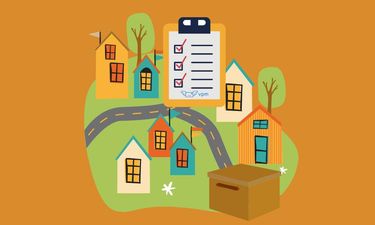
For your residential address to be considered valid by bank standards, it must meet the following criteria:
- It needs to be a physical location. In other words, it should be a real brick-and-mortar structure, like a house, condo, or apartment.
- It’s your long-term residence. Ideally this is where you live most of the time.
- You have official documentation. A lease agreement and/or utility bill that proves your residence will typically suffice for this requirement.
Why other types of addresses fail verification standards
Wondering why PO boxes, virtual offices, CMRA addresses, and other temporary locations don’t make the cut? For starters, none of these are true “livable” spaces, therefore you’d be hard pressed to acquire a lease or any other type of documentation that shows you reside at any of them.
But more importantly, the Bank Secrecy Act requires it. All customers must provide a physical address in addition to their name, date of birth, and identification number (such as a SSN, EIN, or ITIN).
Banks have also gotten far more aggressive about flagging suspicious physical addresses. If your address shows up in a building with hundreds of unrelated tenants or is associated with high levels of fraud activity, their systems won’t hesitate to flag or freeze it.
If the issue of finding a reputable, long-term address has become a recurring stress in your world, it might be time to consider TruResidence (TruRes).
How TruResidence (TruRes) helps you build a stable home base
TruResidence is VPM’s hassle-free solution for those needing a legitimate U.S. residential address they can rely on long-term, without physically living there.
At its core, TruResidence (TruRes) provides you with a verified U.S. residential address in Texas (as well as several other states), allowing you to maintain U.S. ties for personal accounts while managing your mail online from anywhere in the world.
You get one consistent, stable home address that you can use across banks, financial platforms, and official records, regardless of where you reside. It’s more convenient than using a friend or family member’s address, since either can up and move at any time. And it’s far more affordable than maintaining a residential home in the states while you live and work abroad.
How TruResidence (TruRes) differs from traditional virtual mailboxes
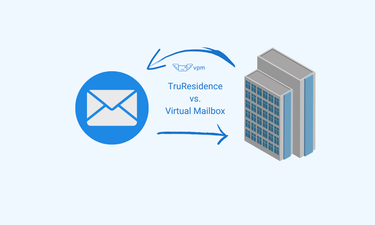
Most traditional virtual mailboxes are classified as Commercial Mail Receiving Agencies (CMRAs). While these might’ve worked back in the past, banks, brokerages, and government agencies have gotten increasingly good at spotting these addresses. 9 times out of 10, they are automatically flagged or rejected.
TruResidence (TruRes) differentiates itself from traditional virtual mailboxes by providing a legitimate, non-CMRA residential address, which can be used for anything from personal banking to government records and tax filings.
Why you should choose TruResidence (TruRes) over a friend or family member’s address
Relying on a friend or family member’s address might seem convenient, but it introduces instability you can’t control. People move, change living situations, or simply forget to notify you when important mail arrives. If they relocate, you’re left scrambling to update every bank, platform, and account tied to that address, often under strict deadlines.
TruResidence (TruRes) eliminates that uncertainty by giving you a dedicated, long-term residential address that won’t change unexpectedly. Your address is backed by a professionally managed service, not someone’s living situation. Mail is handled securely, digitized promptly, and never at risk of being misplaced in a busy household. Plus, because the address is verified and documented, it removes the awkwardness of relying on others for something as sensitive as your identity verification and financial correspondence.
TruResidence (TruRes) vs. renting a traditional home
Renting an apartment or home in the U.S. solely to maintain a residential address is one of the most costly, complicated, and unnecessary approaches available to expats and long-term travelers. Traditional leases require credit checks, deposits, ongoing rent payments, utilities, and often proof of employment—all for a property you don’t actually plan to live in! On top of that, many landlords don’t allow tenants to use their rental address as a primary residence unless they physically occupy the space.
TruResidence (TruRes) gives you all the documentation a rental would—a residential address, a signed lease agreement, and a utility bill in your name—at a fraction of the cost and without the burdens of maintaining a physical home. There’s no property to manage, no landlord involvement, and no long-term commitment beyond the service itself. It’s an easy, travel-friendly alternative for expats who need a residential address without the financial weight or logistical nightmare of a traditional rental.
The long-term value of a TruResidence (TruRes) address
As one of the 5.5 million Americans living abroad, you’re looking for an address solution that is secure, affordable, and essentially foolproof–you want to be able to open and maintain personal accounts without any type of interruptions. TruResidence (TruRes) gives you exactly that: a stable, verifiable U.S. home address designed to support your life overseas.
When you sign up for the service, you’ll get a long-term residential address plus benefits like secure mail handling, digital access to your mail from anywhere, address exclusivity, and the ability to keep your most important accounts active.
Give your mail the protection it deserves
Personal mail often includes some of the most sensitive documents you’ll ever receive: bank statements, tax notices, brokerage correspondence, legal documents, insurance paperwork, and identity-related records. If your mail isn’t handled properly, the risks can range from inconvenience, at best, to outright identity theft at worst.
Unlike mail forwarding setups or arrangements with friends and family, TruResidence (TruRes) is built for situations like yours, where reliability and confidentiality are essential.
How VPM receives, protects, and processes mail
Since its inception, VPM has owned and operated its centralized mail processing centers, which were designed to reduce risk at every step. Mail is picked up weekly by a trusted courier who follows a controlled handoff protocol to ensure your mail never passes through unknown third parties. Every pickup is logged, tracked, and transported directly to VPM’s secure facility.
Once inside the processing center, mail is received securely, handled exclusively by trained staff, and processed under strict operational protocols. Access to mail handling areas is restricted, monitored by surveillance, and governed by role-based permissions to prevent unauthorized entry. Staff undergo background checks, compliance training, and follow documented procedures designed to protect the integrity of every piece of mail.
Manage personal mail digitally from anywhere, anytime
One of the biggest perks of TruResidence (TruRes) is the freedom to manage your mail no matter where you are. Whether you’re living in Australia for six months or bouncing between cities in Europe, you can still keep up with your U.S. correspondence without waiting for someone to physically forward it.
Mail is scanned and uploaded into an easy-to-use digital dashboard that works on any device. You’ll get a clear preview of every piece of mail that arrives, and from there, you get to decide exactly what happens next: forward it to wherever you’re staying, store it securely, or shred it permanently. This level of control gives you the ability to act quickly on time-sensitive documents, like tax notices or bank verification letters, without waiting weeks for international forwarding or relying on unreliable local mail systems.
For international travelers and global nomads, this consistent access is everything. No matter how often your location changes, your address doesn’t. Since everything is centralized in one digital hub, you get to skip dealing with paper mail, forwarding delays, or scattered documentation. Instead, you have an organized, searchable archive at your fingertips.
Ensure your address remains exclusive for years to come
One of the lesser-known challenges of using “shared” or heavily reused addresses, particularly mailbox stores or co-working spaces, is that banks sometimes flag them due to overuse. When too many people claim the same address, it can trigger internal compliance reviews or make the address appear suspicious during verification.
Each TruResidence (TruRes) address is intentionally limited in how many users it supports. This preserves the integrity and reputation of the address, helping prevent saturation and ensuring it remains suitable for personal banking and identity verification long term. Exclusivity strengthens your credibility, which is especially important if you rely on the same address across multiple financial platforms.
Keep all official correspondence in one, easy-to-find place
When you’re juggling multiple trips, time zones, and countries, it’s easy for important documents to slip through the cracks. Tax notices, financial letters, ID renewals, and health insurance paperwork are likely high up on your list of “things you never want to miss”.
Centralizing everything under one residential address gives you a single point of reference that never changes, even when everything else in your life does. You’re much less likely to miss deadlines, lose track of paperwork, or overlook a request from your bank or brokerage. Since everything is digital and accessible in seconds, recordkeeping becomes much easier.
Open and maintain personal financial accounts and credit cards while you travel
If you’ve ever had a bank freeze your account because of an address issue, you know how stressful that can be. Maintaining consistency is crucial to keeping personal checking accounts, investment accounts, and credit cards active.
With TruResidence (TruRes), you get a long-term address you can safely keep on file with your banks and financial institutions. This helps reduce unnecessary inactivity flags, address mismatches, or account reviews triggered by frequent address changes.
Your U.S. residential address also helps keep your favorite credit cards active while you’re abroad—which is much easier than lugging around foreign currency everywhere you go. Because it meets verification requirements, your cards stay open, usable, and ready whenever you need them.
TruResidence (TruRes) lets you keep one permanent address on file, giving you continuity across your entire financial life. Of course, when that address is in a state with real long-term advantages, you get even more value out of it.
Why Heartland, TruResidence (TruRes) Texas works as a long-term home base
TruResidence (TruRes) Texas is located in Heartland, a quiet, residential community just outside the Dallas metro area. It’s clean, secure, and ideal for maintaining a stable U.S. residential presence. Beyond the physical location, Texas carries several advantages that make it a popular choice among expats, travelers, and digital nomads.
Most notably, Texas has no personal state income tax, which makes it an appealing long-term home base for people who want to keep their tax situation simple. Additionally, Texas is well-recognized by banks, regulatory agencies, and financial platforms. It’s one of the most widely accepted states for maintaining continuity, especially for an American who lives or works abroad, like yourself.
Get a stable TruResidence (TruRes) Texas residential address that goes wherever you go
Life moves fast—and your address (or lack of one) should never be the thing that holds you back. With TruResidence (TruRes), you’ll get a valid U.S. residential address to serve as your home base while you travel and work overseas. Secure, fully documented, and accessible online, it allows you to handle your mail digitally, maintain confidentiality, and keep your accounts active, without tying you to one location.
Whether you’re hopping continents or just exploring the U.S. (for now), TruResidence Texas gives you a dependable home address that travels with you.